
1. Introduction
Mechanical and electrical (M&E) systems keep buildings safe, comfortable, and operational. When they fail, the impact is often immediate: disruption, safety risk, and unexpected cost.
Predictive maintenance is one-way organisations are improving reliability but it’s important to understand what it is, when it works, and when it doesn’t.
2. What Is Predictive Maintenance?
Predictive maintenance uses condition data such as temperature, vibration, energy use, or operating trends to identify early signs of equipment deterioration.
Instead of maintaining equipment purely on a fixed schedule or reacting after failure, issues are addressed before they become critical.
In simple terms, it helps answer one key question:
“Is this asset likely to fail and when?”
3. Why It Makes Sense for M&E Systems
Many mechanical and electrical assets show warning signs before they fail. These signs can be detected through tools such as thermal imaging, vibration monitoring, system trend analysis, and inspections.
Predictive maintenance is particularly valuable for:
- HVAC plant (chillers, boilers, pumps, fans)
- Electrical infrastructure (switchgear, transformers, UPS systems)
- Critical motors and control equipment
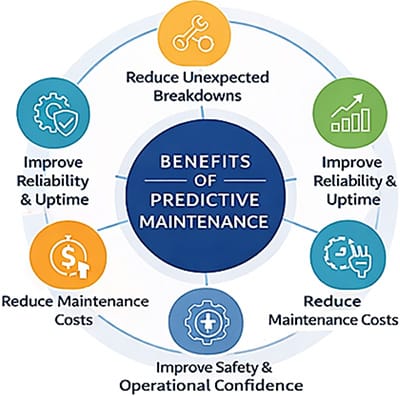
When applied to the right systems, predictive maintenance can:
- Reduce unexpected breakdowns
- Improve reliability and uptime
- Extend equipment life
- Reduce long-term maintenance and replacement costs
- Improve safety and operational confidence
 4. When Predictive Maintenance Is Not the Right Fit
Predictive maintenance is not a one-size-fits-all solution.
Some assets are better managed using:
- Routine preventive maintenance
- Condition-based inspections
- Run-to-failure approaches for low-risk equipment
Applying predictive maintenance to every asset can add cost and complexity without delivering value. The key is selective, risk-based use, not blanket adoption.
5. How to Decide What’s Right for Your Facilities
The most effective approach starts with understanding:
- Which systems are critical to your operations
- What happens if they fail
- Whether early warning signs can realistically be detected
- Whether your organisation can act on the information
Predictive maintenance works best when it supports clear operational decisions, not just data collection.
Our Approach
We help clients apply predictive maintenance where it makes sense, not because it’s fashionable.
That means:
- Identifying critical M&E assets
- Matching maintenance strategies to risk and value
- Integrating predictive methods with existing maintenance plans
- Focusing on outcomes: reliability, safety, and cost control
The goal isn’t more data.
It’s fewer surprises.
In Summary
Predictive maintenance can be a powerful tool for managing mechanical and electrical systems when it is applied selectively, thoughtfully, and as part of a wider asset strategy.
Used well, it shifts maintenance from reactive response to planned reliability.
If you’d like to understand whether predictive maintenance is right for your buildings, we’re happy to have that conversation.